 |
 |
|
|
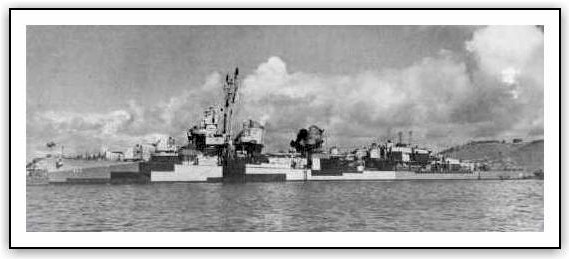
USS FLETCHER
|
Dear John, My name is Paul Bigelow and I'm a major in the USAF at Hurlburt Field in FL (near Fort Walton Beach). I'm trying to research some family history and came upon the history of the USS Fletcher (my mother's maiden name). The reference to Elmer Bigelow is the first piece I've been able to trace in my research for the USS Bigelow (DD-942). Can you provide additional details, if available, of Elmer C. Bigelow who died during the gunfire attack on 14 Feb 45 of Corregidor? Thank you in advance for your time and consideration.
Sincerely, |
|
|
The following correspondence
is edited. Read their full text by visiting The USS Fletcher Reunion
Group.
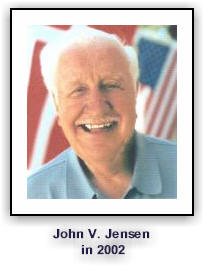
USS Fletcher (DD-445) Dear Major Bigelow, I was aboard the USS Fletcher, Feb. 14, 1945 and remember the activities of the day very well. I personally did not know Elmer Bigelow, he was in a different division and with over 300 men aboard, we would see a shipmate and only know him from a smile. With a "24 hour day" while underway, only a third of the ship's crew would be needed at their designated work places. At General Quarters, everyone would have their assigned "battle station" be it engine or boiler rooms, on the bridge or to the gun mounts with their support personnel and to the various "damage control group" centers. located around the ship. These "damage control" men were experienced, having special tools including portable water pumps for using sea water in case of fire and the many duties they may be required to do in an emergency. I think Elmer was in this type of unit and why he was there, ready to put out the fire in the ammunition storage compartment.
We immediately reversed our engines and had backed up about a hundred feet when a shell from Corregidor hit our ship a hundred feet forward from my "battle station". I will always believe I was spared. The shell cut open the deck into the chief's living quarters below and put big holes in #1 gun (where most were killed) and disabled the use of #2 gun. Below decks were the ammunition storage compartments for the damaged guns and there, a fire had started by the exploding shell. Elmer's quick action in putting out the fire in a confined area without thinking of himself, and taking the time in using the normally used breathing equipment, saved our ship from terrible damage if not losing the whole ship with many fatalities. The crew of the USS Fletcher to this day believe this to be true. We had just been hit by the enemy's shell, when, within minutes, orders came for our ship to rescue men from a sinking mine sweeper which was much closer to Corregidor. As we headed for the stricken craft, we knew there was an active gun just waiting for our ship to come closer. Then, out of the "blue", a plane flying just above the waves with a plume of white smoke trailing hid our ship from the island completely. In those few minutes till the smoke cleared, our ship "regrouped" and with the help of this spotter plane, (from a cruiser) our guns were able to fire round after round into the tunnel where, we were told, by the plane's pilot, the gun responsible for our ship's damage, was located and destroyed it. At this same time, my gun captain, had been ordered to help with rescue work at the damaged area. I was standing next to him so he handed his earphones to me. (Our 40mm gun had not been used in this operation,) While our ship was picking up the mine sweeper's survivors, orders came from the bridge telling me to take our crew to another 40mm gun near the bow. Men from this forward gun had gone to help in the rescue of our casualties. After reporting all present at our new gun position, I received orders to have our crew fire at the yard mine sweeper along the water line, This was to sink it so it wouldn't keep floating and possibly land on the beach for the enemy to board. We heard later there were several dead aboard. The USS Hopewell had originally gone to the rescue of this stricken craft but enemy shells landing on the destroyer had killed many men, it stopped the rescue efforts and had to retreat, passing us with its dead readily visible. We returned to Subic Bay, transferred our six dead and seven wounded to a destroyer tender (repair ship) and prepared for the next morning when paratroopers would land on top of Corregidor. The next day our ship was in position and participated as required, even if we only had three guns available, if needed, we would use them as if there were five. It was also the day Elmer Bigelow died from double pneumonia, the result of breathing only smoke too long. His heroic action was noted. After the war, President Truman gave his mother the Congressional Medal of Honor, posthumously. For conspicuous gallantry at the risk of his life. A destroyer, USS Elmer Bigelow DD 942, was named in his honor.
In passing,
another destroyer, USS La Vallette (DD-448) was ordered to finish firing at the
still floating mines in the area we had left earlier, but the ship hit an uncut
mine, opening a huge hole in its starboard side. It nearly sank with its bow
nearly level with the waves. A second destroyer, USS Radford (DD 446) was
dispatched to rescue it, but then, also hit a mine in the same forward fireroom,
starboard side as the La Vallette. The casualties for the Radford were less when
the Captain had already ordered all unnecessary men normally below, to stay on
deck. The Radford was able to tow the La Vallette the 30 miles back to Subic
Bay, mentioned earlier. Both were given enough repairs to handle the trip to a
West Coast shipyard for restoration. J.V.Jensen ( The USS Fletcher Reunion Group contains the comprehensive Corregidor Action Report)
|
||
 |
||
 You
may find it interesting to know that for three days prior to the action you are
interested in, our task-force of cruisers and destroyers were firing shells at
Corregidor Island's steep cliffs, using our five (five inch) mounts from dawn to
dusk. Retired 30 miles north to Subic Bay, our advance base, where we watched
movies on the bow of the ship, using #1 enclosed mount sideways with its side
door open where the projector was placed so it would be above our heads. Buckets
upside down was a very common seat. The next morning it was down the coast and
back to bombarding Corregidor. During these days, there was no return fire from
the island. Our range finders being powerful, could see the tunnels in the
cliffs, covered with removable brush, where a gun emplacements may be, but these
guns were likely on tracks, rolled back from the entrance and probably not
damaged. On February 14th. another destroyer and our ship were ordered to blow
up mines which were floating in the water. A Navy (yard) mine sweeper earlier,
had cut their cables from "anchors". Moving very slowly as each shell fired
did not explode a mine and with Corregidor being silent, It was a surprise to
see shells landing in the water near our ship and they certainly were not coming
from our sister ship.
You
may find it interesting to know that for three days prior to the action you are
interested in, our task-force of cruisers and destroyers were firing shells at
Corregidor Island's steep cliffs, using our five (five inch) mounts from dawn to
dusk. Retired 30 miles north to Subic Bay, our advance base, where we watched
movies on the bow of the ship, using #1 enclosed mount sideways with its side
door open where the projector was placed so it would be above our heads. Buckets
upside down was a very common seat. The next morning it was down the coast and
back to bombarding Corregidor. During these days, there was no return fire from
the island. Our range finders being powerful, could see the tunnels in the
cliffs, covered with removable brush, where a gun emplacements may be, but these
guns were likely on tracks, rolled back from the entrance and probably not
damaged. On February 14th. another destroyer and our ship were ordered to blow
up mines which were floating in the water. A Navy (yard) mine sweeper earlier,
had cut their cables from "anchors". Moving very slowly as each shell fired
did not explode a mine and with Corregidor being silent, It was a surprise to
see shells landing in the water near our ship and they certainly were not coming
from our sister ship.